
Amplifiers Explained: Types, Specs, and Applications
Amplifiers are everywhere , in your stereo, your phone, and even in satellites orbiting Earth. They take a weak signal and make it stronger so you can hear music, watch TV, or send data across the globe. Here’s what they are, how they work, and which type you need.
What Is an Amplifier?
An amplifier is an electronic device that increases the power, voltage, or current of a signal. It takes a small input signal and produces a larger output signal that’s an exact copy, just bigger. Think of it like a magnifying glass for electricity.
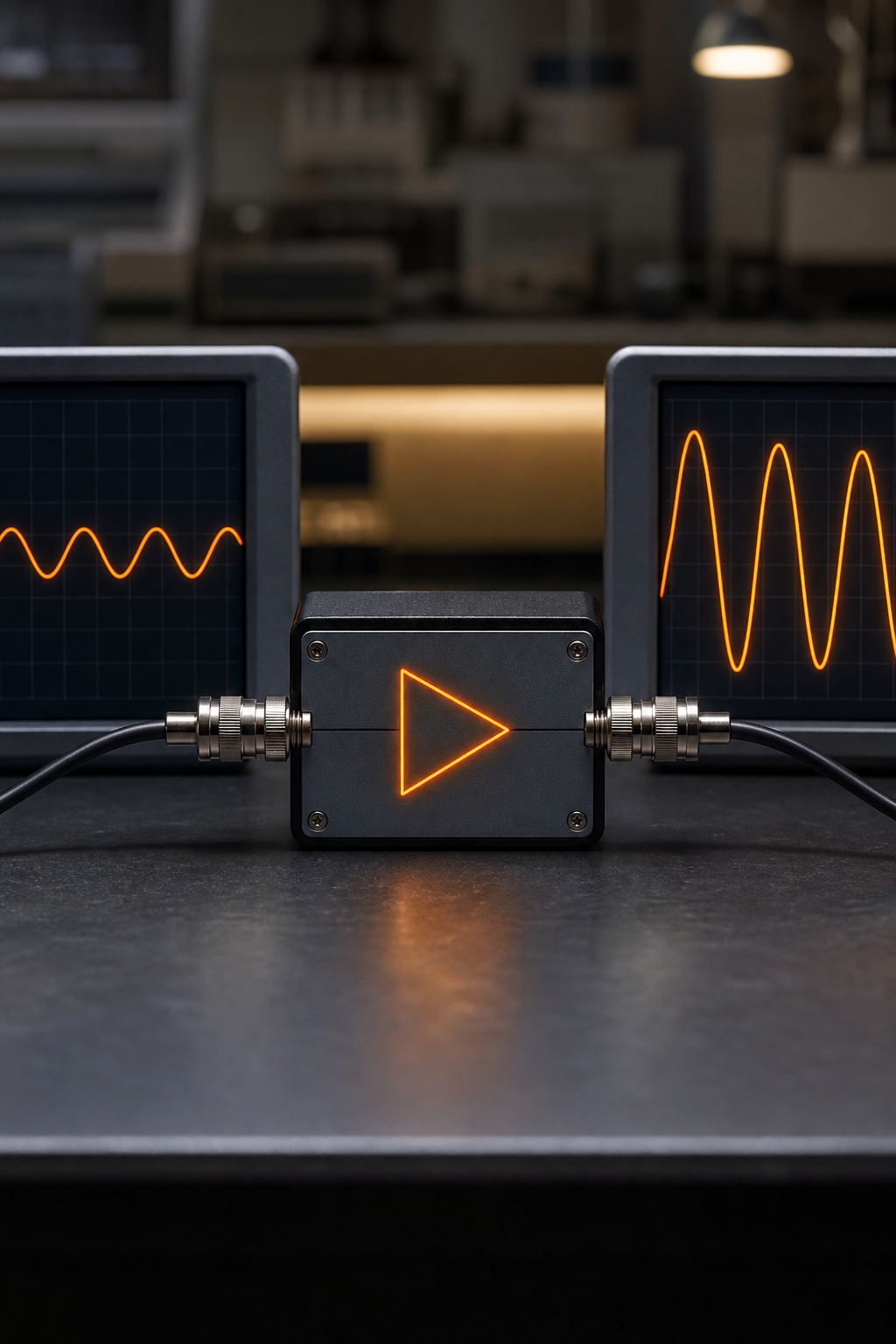
Amplifiers are built around active components , transistors or vacuum tubes , that control a larger current using a smaller one. The key is linearity: the output must be a faithful reproduction of the input, just stronger. If it distorts, you lose information. According to Wikipedia, amplifiers can be classified by their active device (transistor, tube, magnetic) and by their application (audio, RF, etc.).
There are many amplifier classes , A, B, AB, C, D , each with trade-offs between efficiency and signal quality. Class A is the most linear but the least efficient; Class D is very efficient but needs careful filtering to avoid noise. Most satellite receivers use Class A or AB for low-distortion signal processing.
Types of Amplifiers: Audio, RF, and Satellite
Amplifiers fall into three broad categories based on the signals they handle. Here’s a quick comparison:
Audio amplifiers boost the signal from a microphone, guitar, or digital music player to drive speakers. They prioritize low distortion and flat frequency response. You’ll find them in everything from a pocket headphone amp to a concert PA system.
RF amplifiers work at much higher frequencies. They’re used in radio transmitters to push a signal to an antenna, or in receivers to amplify a faint incoming wave before demodulation. RF amps must handle impedance matching and minimum noise figure , especially at gigahertz frequencies.
Satellite amplifiers are a specialized subset of RF amps. The most common is the Low-Noise Block (LNB) mounted on a satellite dish. It takes the weak microwave signal from space, amplifies it by 50-60 dB, and downconverts it to a lower frequency so a cable can carry it to the receiver. You can learn more about professional satellite installation to ensure your LNB and dish work together correctly.
Key Specifications and How to Choose
Every amplifier datasheet lists a handful of specs that tell you its performance. Here are the ones that matter most:
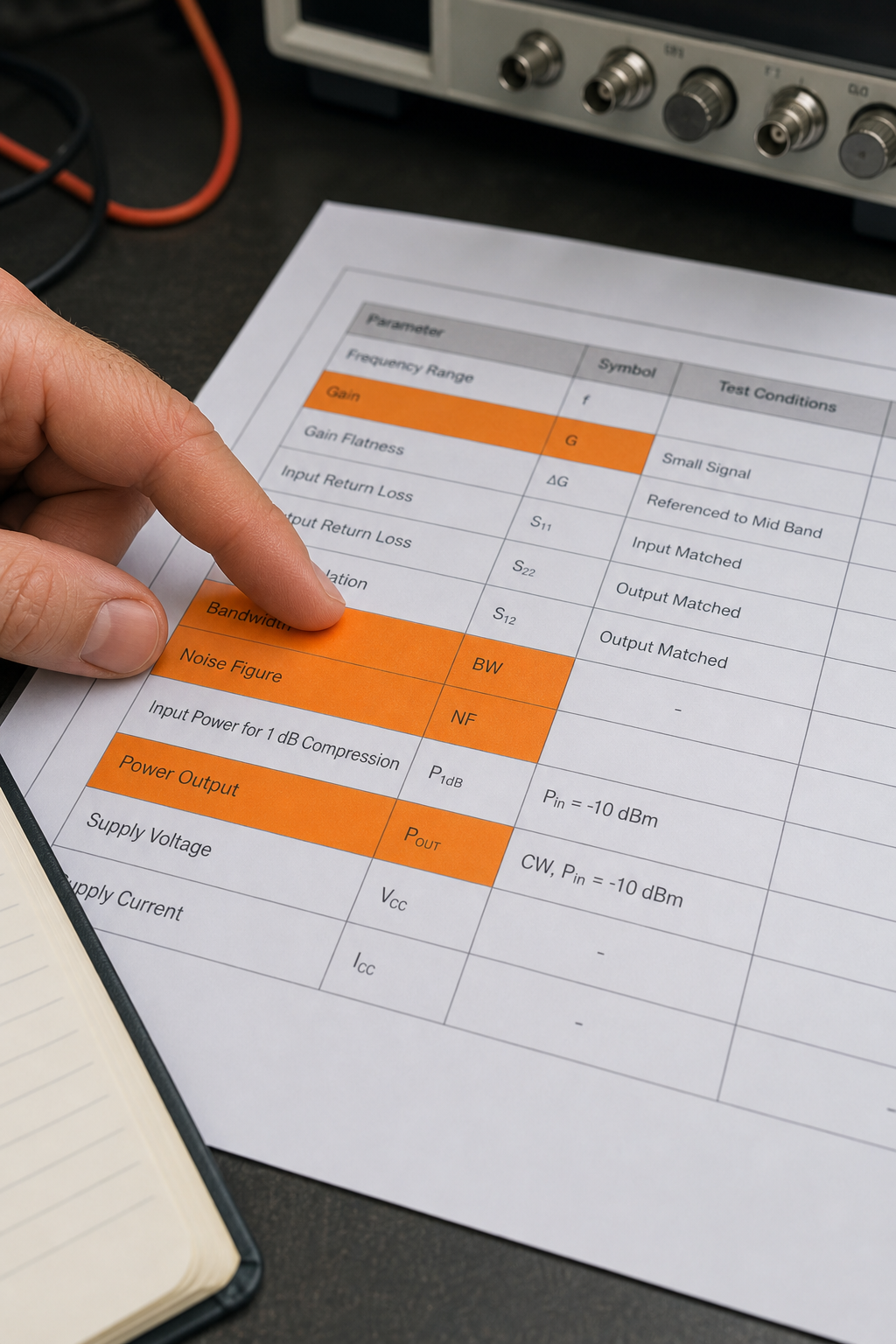
Gain, how many times the signal is amplified, measured in decibels (dB). For satellite LNBs, gain is typically 50-65 dB. Too low, and the signal gets lost in cable noise. Too high, and the receiver can overload.
Bandwidth, the range of frequencies the amplifier can handle without significant loss. Audio amps cover 20 Hz, 20 kHz; satellite LNBs need to cover radar bands like Ku (10.7, 12.75 GHz) or Ka (18, 40 GHz).
Noise Figure, how much noise the amplifier adds to the signal. Lower is better. Good satellite LNBs have noise figures below 1 dB. An amp with a high noise figure can ruin a weak signal before it ever reaches the receiver.
Output Power, the maximum signal level the amp can produce before clipping (distortion). For satellite use, output power is less critical than gain and noise figure because the signal is already small.
When choosing an amplifier, match the bandwidth to your application, pick a gain that compensates for cable and splitter losses, and prioritize a low noise figure for weak signals. As Monolithic Power Systems explains, operational amplifiers in particular rely on precise feedback to maintain linearity , a principle that applies to all amplifier types.
Applications in Satellite Systems
Satellite TV and internet rely on amplifiers at every stage: inside the satellite itself (transponders use high-power traveling-wave tube amplifiers), in the LNB on the dish, and again inside the receiver before the demodulator.
The LNB is the most important amplifier for home satellite. It must have very low noise (usually under 0.5 dB) to catch weak signals from a satellite 35,000 km away. If you use a poor LNB or mismatch it with your dish, you’ll lose channels or suffer pixelation. That’s why DISH satellite TV installations use high-quality LNBs matched to the reflector size.
Beyond TV, satellite amplifiers are critical for VSAT internet terminals and Earth stations. These systems often use outdoor BUC (Block Upconverter) amplifiers to transmit from the ground to the satellite. The same gain and noise figure rules apply, just in reverse.
Common Pitfalls and Maintenance
Even a good amplifier can fail or perform poorly if you don’t treat it right. Here are the biggest mistakes and how to avoid them.
Using an amp with too much gain. More dB isn’t always better. Too much gain can saturate the receiver input, creating distortion. For satellite, keep LNB gain between 50 and 60 dB unless you have a very long cable run.
Ignoring impedance matching. Amplifiers expect a specific impedance (usually 50 or 75 ohms). Mismatch causes reflections that reduce signal and can even damage the amp. Use proper cables and connectors.
Poor power supply. Amplifiers need clean, stable DC voltage. Noisy power supplies introduce hum and interference. For satellite LNBs, the power comes from the receiver over the coax , make sure that voltage is within spec (typically 13, 18 V).
Overheating. Outdoor amplifiers (like LNBs) get sun-baked. Heat degrades noise figure and can kill the electronics over time. Mount them with good airflow and consider a shade if they’re in direct sun.
Regular maintenance: inspect cable connections for corrosion, tighten F-connectors, and check the LNB’s plastic radome for cracks. A tiny water entry can short the amplifier’s DC supply and take down your entire satellite system.
FAQ
What does an amplifier do?
An amplifier increases the amplitude of a signal , voltage, current, or power , without changing its shape. It takes a weak input and produces a stronger output that the next stage can use. Audio amps drive speakers; RF amps boost radio signals; satellite LNBs amplify faint microwave signals from space before they travel down the cable.
What is the difference between an audio amplifier and an RF amplifier?
Audio amplifiers operate at low frequencies (20 Hz, 20 kHz) and prioritize low distortion and flat response. RF amplifiers work at much higher frequencies (kHz to GHz) and focus on gain, noise figure, and impedance matching. Satellite LNBs are RF amplifiers with extremely low noise to pick up weak signals from orbit.
What does LNB stand for in satellite TV?
LNB stands for Low-Noise Block downconverter. It combines a low-noise amplifier with a mixer that shifts the satellite’s high-frequency signal down to a lower intermediate frequency (usually 950, 2150 MHz) so it can travel through standard coaxial cable to the receiver.
How do I choose an amplifier for my satellite dish?
Look at the LNB’s noise figure (ideally below 1 dB), gain (50, 60 dB for residential dishes), and frequency band (Ku or Ka). Make sure it matches your dish’s feedhorn type and your receiver’s input. A mismatched LNB can cause signal loss or no reception at all.
Can I use any amplifier for my home theater?
No. Use an audio amplifier rated for your speaker impedance (usually 4 or 8 ohms) and power handling. An RF or satellite amp won’t work for audio because it’s designed for different frequencies and often adds too much noise at audible ranges.
Why does my satellite signal drop in heavy rain?
Rain attenuates Ka and Ku band signals significantly. A good LNB with low noise figure helps, but heavy rain can still cause fade. The amplifier itself isn’t the issue , it’s the signal path. Some modern systems use adaptive coding and modulation to compensate.
Conclusion
Amplifiers are simple in concept but critical in practice. Choosing the right one , audio, RF, or satellite , comes down to matching bandwidth, gain, and noise figure to your specific signal and cable setup. For satellite systems, a quality LNB from a trusted supplier like thesatellitestore.com ensures you get the strongest, cleanest signal possible. Next time you set up a dish or an audio system, start with the amplifier specs and work from there , it’ll save you troubleshooting later.